School with Science Lab in Purulia: Learning Through Practical Education
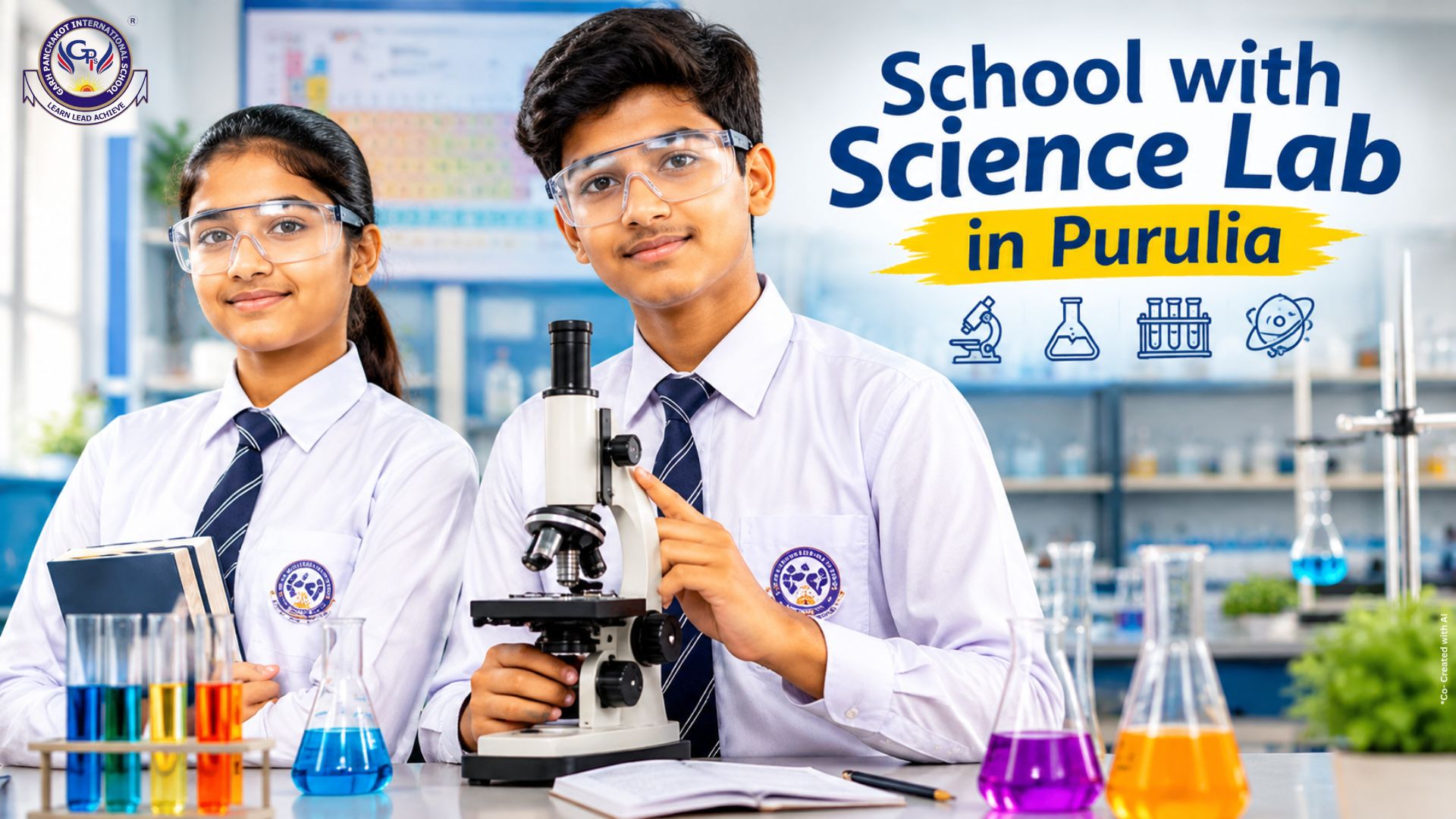
A School with Science Lab in Purulia can give students an important opportunity to move beyond textbook learning and understand science through practical experience. At Garh Panchakot International School (GPIS), science education is supported by well-equipped laboratories where students can connect classroom concepts with observation, experimentation, and practical learning.
Science is not only about remembering formulas, definitions, or theories. It is also about asking questions, making observations, understanding how things work, and learning through experience.
Why Choose a School with Science Lab in Purulia?
When parents look for a School with Science Lab in Purulia, they are often looking for an educational environment where children can gain both theoretical knowledge and practical understanding.
A science laboratory can make classroom learning more engaging by giving students opportunities to observe concepts in action. Instead of simply reading about scientific principles, students can explore them through guided experiments and activities.
At GPIS, practical learning is an important part of the educational approach. The school provides well-equipped Science and Computer Laboratories along with a CBSE-based curriculum that focuses on conceptual clarity, critical thinking, and practical understanding.
How Does a Science Laboratory Improve Learning?
A laboratory can help students develop a more practical approach to education. When students participate in experiments, they have the opportunity to observe results, discuss their findings, and understand the connection between theory and real-world applications.
Practical science learning can help students develop:
- Observation skills
- Analytical thinking
- Problem-solving abilities
- Curiosity and questioning
- Logical reasoning
- Attention to detail
- Confidence in learning through experimentation
These skills can be valuable not only in science subjects but also in other areas of education and everyday life.
Learning Science Beyond the Textbook
Traditional classroom teaching provides students with essential theoretical knowledge. However, practical experiences can make that knowledge easier to understand and remember.
For example, when students learn a scientific concept in the classroom and later observe a related experiment, they can better understand how the concept works in practice. This creates a stronger connection between what they read and what they experience.
At GPIS, the objective is to encourage students to understand concepts rather than rely only on memorisation. The school’s curriculum also emphasises experiential and activity-oriented learning.
A Complete Learning Environment at GPIS
Science laboratories are one part of a broader educational environment. At Garh Panchakot International School, students have access to facilities designed to support different areas of development.
These include:
- Well-equipped Science and Computer Laboratories
- Smart and well-ventilated classrooms
- A library with academic and reference books
- Spacious playgrounds and sports facilities
- Activity rooms for music, dance, art, and creativity
- Safe drinking water and hygienic sanitation facilities
This combination allows students to experience education through different forms of learning rather than depending entirely on classroom lectures.
Science, Curiosity and Critical Thinking
Children are naturally curious. They ask questions about how things work and why certain events happen. A good science education should encourage that curiosity rather than discourage it.
Laboratory learning can give students a structured environment to explore their questions. With appropriate guidance from teachers, students can observe, analyse, discuss, and learn from their experiences.
This approach also supports critical thinking. Instead of simply accepting information, students can learn to examine evidence, understand processes, and develop their own conclusions.
More Than Just Science Education
At GPIS, the focus is not limited to academic subjects. The school’s educational approach also gives importance to sports, arts, cultural activities, communication, personality development, and life skills.
This balanced approach matters because children need different kinds of experiences as they grow. Academic knowledge can provide a strong foundation, while sports, creative activities, communication, and practical learning can help students develop confidence and other important skills.
What Should Parents Look for in a School with Science Lab in Purulia?
Parents can consider several factors when selecting a school:
- Whether the laboratory is properly equipped
- Opportunities for practical and experiential learning
- The school’s academic curriculum and teaching approach
- Teacher guidance during laboratory activities
- Opportunities for students to ask questions and explore concepts
- Other facilities supporting sports, creativity, and personality development
- A safe and supportive learning environment
A science laboratory becomes most valuable when students are given meaningful opportunities to use it as part of their learning journey.
Why Practical Learning Matters for the Future
The ability to observe, analyse, question, and solve problems can benefit students throughout their education. These skills can become particularly useful as students move towards higher classes and more advanced subjects.
The purpose of practical learning is therefore not simply to make science lessons more interesting. It is to encourage students to develop a mindset of curiosity and inquiry.
At GPIS, the aim is to provide students with opportunities to build this mindset while developing strong academic foundations.
Conclusion
Choosing a School with Science Lab in Purulia can be an important step for parents who want their children to experience practical and concept-based learning. At Garh Panchakot International School, science laboratories form part of a broader educational environment focused on academic learning, practical understanding, communication, sports, creativity, and overall development.
The goal is to help students learn not only from books but also through observation, experimentation, participation, and experience.
FAQs
Why is a science laboratory important in a school?
A science laboratory allows students to connect theoretical concepts with practical experiences. Through guided experiments and observations, students can develop curiosity, analytical thinking, problem-solving abilities, and a better understanding of scientific concepts. Practical learning can also make lessons more engaging and help students understand how classroom knowledge relates to the real world.
What facilities should parents look for in a School with Science Lab in Purulia?
Parents should consider whether the school provides properly equipped laboratories, practical learning opportunities, qualified teachers, and a safe environment for students. It is also useful to look at other facilities such as libraries, sports grounds, computer labs, classrooms, and activity spaces to understand whether the school supports overall student development.
Does practical science learning help students?
Yes. Practical learning can help students understand concepts more clearly by allowing them to observe and explore what they learn in class. It can also encourage questioning, logical thinking, attention to detail, and problem-solving. When practical activities are combined with strong classroom teaching, students can develop a deeper and more meaningful understanding of science.